Is Dal Bhat Healthy? Nutrition, Calories and How to Balance the Plate
Is dal bhat healthy? The calories, protein and fibre in a typical plate, what it does well, where it falls short, and how to balance it for weight loss or muscle.
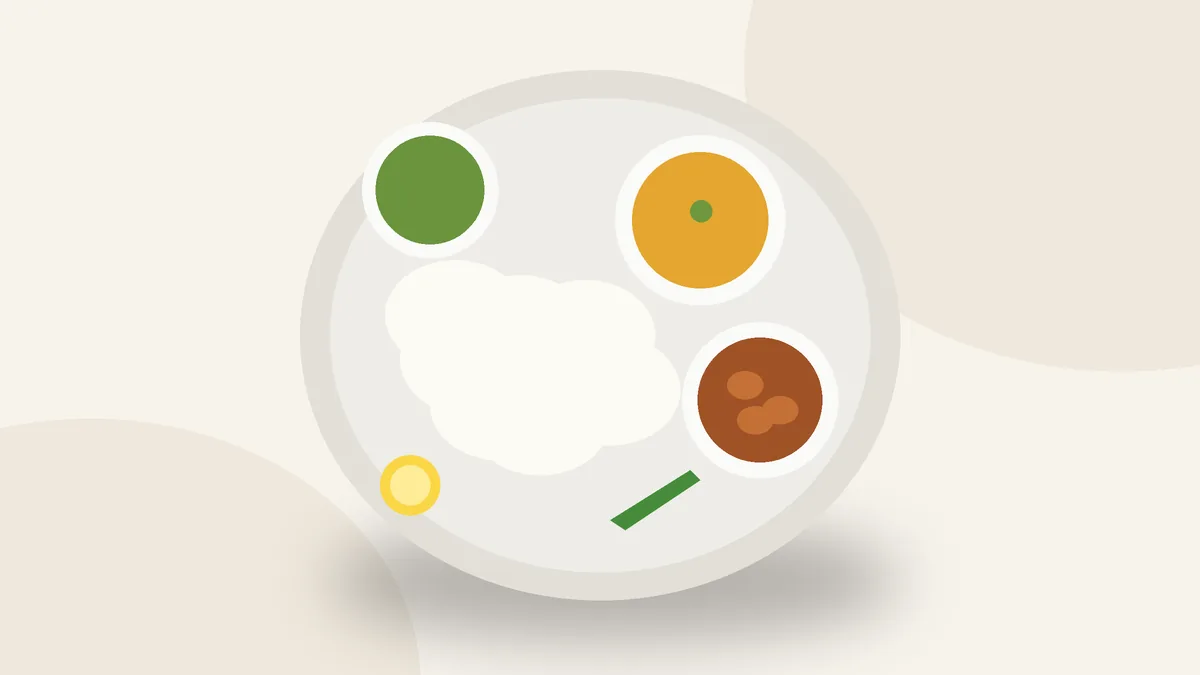
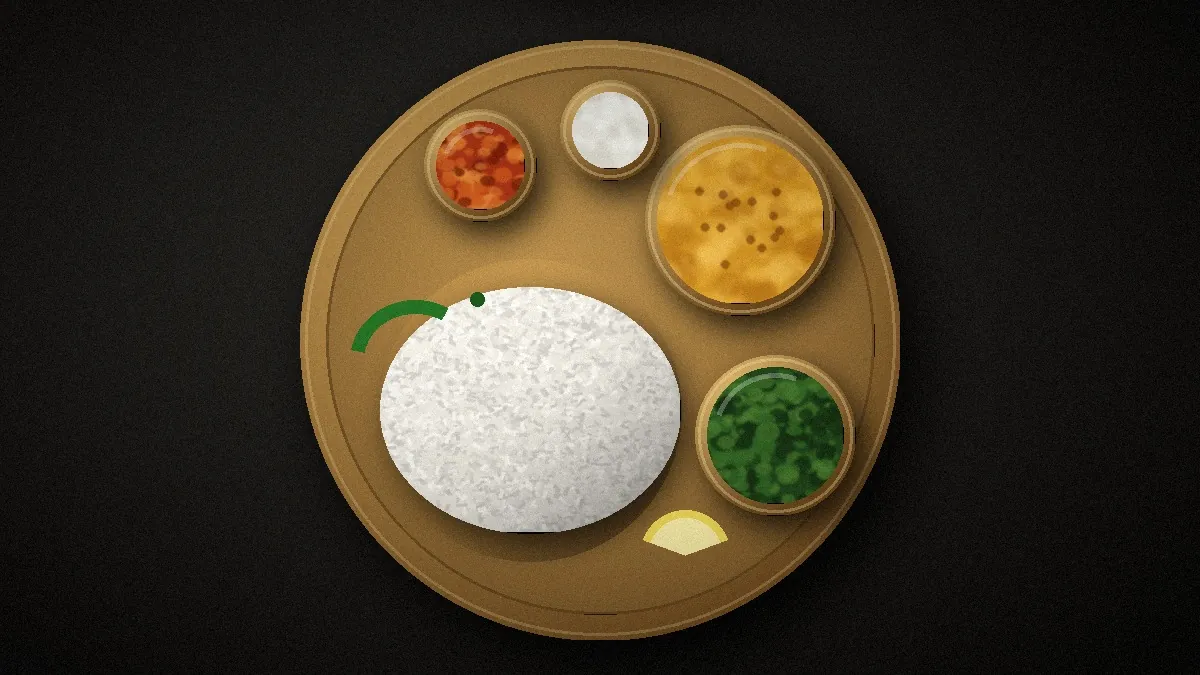
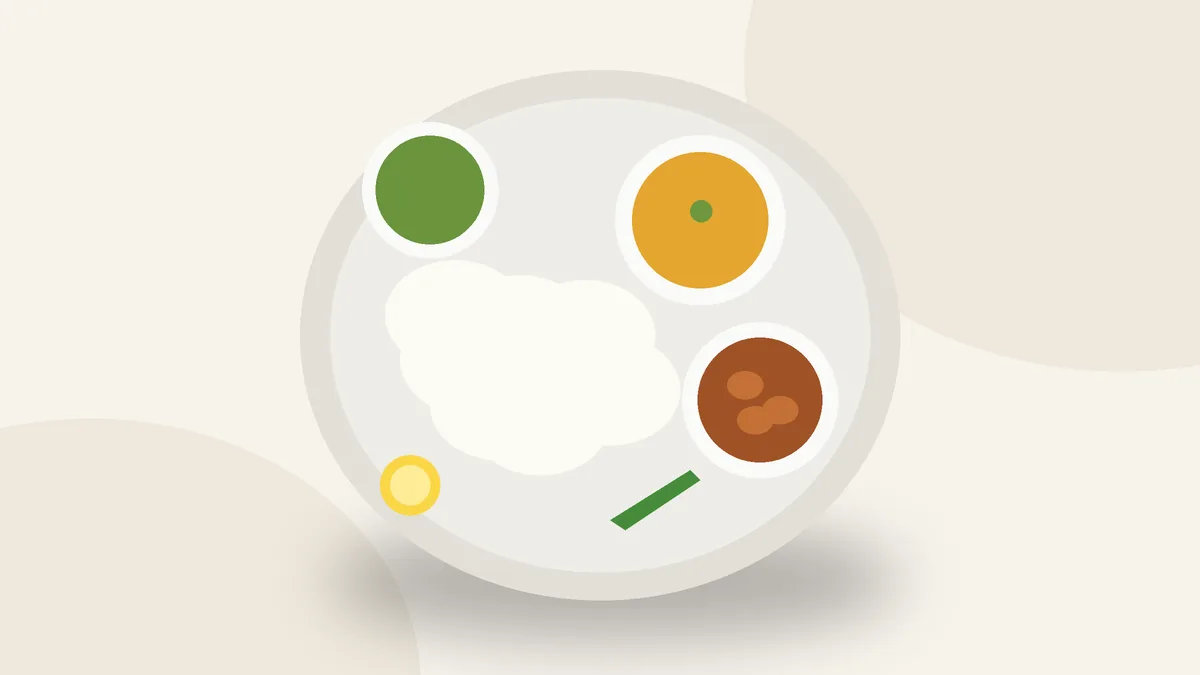
Yes, dal bhat is a healthy meal, as long as the plate is balanced. A typical plate of rice, dal and saag gives about 794 kcal, 28 g of protein and 19 g of fibre (dal bhat calories). It is home-cooked, filling and built from lentils and vegetables. The one thing to watch is the rice: when the rice portion is huge and the dal and vegetables are small, the plate becomes mostly starch.
What is in a typical plate?
These are the numbers behind our dal bhat calorie page, using USDA values for each part:
| Part | Portion | Calories | Protein | Fibre |
|---|---|---|---|---|
| White rice | 300 g (a Nepali plate) | 390 kcal | 8.1 g | 1.2 g |
| Dal made with oil | 196 g (1 cup) | 323 kcal | 16.5 g | 14.5 g |
| Saag | 140 g (1 cup) | 36 kcal | 3.6 g | 2.8 g |
| Mustard oil for the saag | 5 g | about 44 kcal | 0 g | 0 g |
| Total | about 794 kcal | about 28 g | about 19 g |
Your plate at home may be bigger or smaller. Extra ghee, a second helping of rice or a meat curry all change the numbers.
What dal bhat does well
- Lentils are a strong base. Dal gives most of the plate’s protein and fibre. Fibre helps you feel full and supports digestion.
- Vegetables come with every meal. Saag and tarkari add vitamins and minerals at very few calories.
- It is cooked at home, fresh. Less sugar and less ultra-processed food than most fast food.
- It is filling. A full plate keeps most people satisfied for hours, which helps avoid snacking.
Where it can fall short
- Too much rice. The rice is often the biggest part of the plate. Rice is not unhealthy, but large portions make it easy to eat more energy than you need.
- Small amounts of dal and vegetables. A thin, watery dal and a spoon of tarkari give much less protein and fibre than the table above.
- Protein may be low for active people. About 28 g per plate is good, but people who train hard or want to build muscle often need more across the day.
- Ghee and oil add up. One tablespoon of ghee is about 126 kcal (ghee calories).
How to balance the plate
Use the plate method from our Nepali diet plan for weight loss:
- Half the plate: vegetables. Saag, tarkari, salad, gundruk.
- A quarter: protein. Thick dal, eggs, chicken, fish, paneer, chana or soybean.
- A quarter: rice. About one small plate, not two or three.
For weight loss
Keep the dal and vegetables, and make the rice portion smaller. Swapping the second helping of rice for a second bowl of dal or tarkari cuts energy and adds protein and fibre. Read the full 7-day Nepali weight loss meal plan, and use the calorie deficit calculator to find your target.
For building muscle
Keep the full rice portion for energy and add protein: an egg, a piece of chicken or fish, paneer, or a bowl of soybean or chana. See how much protein is in dal bhat for easy ways to push protein higher, and our high-protein Nepali diet plan.
Living abroad?
Dal bhat travels well. Red lentils (masoor) cook fast, frozen spinach works as saag, and basmati or any long-grain rice is fine. Eating out instead? Compare dishes in our guide to Indian restaurant calories.
Frequently asked questions
Is dal bhat good for weight loss?
Yes, if you keep the rice portion modest and fill up on dal and vegetables. Weight loss depends on your total intake over weeks, not on one food.
How many calories are in dal bhat?
A typical plate with 300 g of rice, a cup of dal and a cup of saag has about 794 kcal. Bigger rice portions, ghee or a meat curry add more.
How much protein is in dal bhat?
About 28 g in a typical plate, mostly from the dal. Adding eggs, chicken, fish or paneer raises it a lot.
Is it healthy to eat dal bhat twice a day?
Many Nepalis do, and it can be a healthy pattern if the plate is balanced and the portions match how active you are.
Is brown rice better than white rice in dal bhat?
Brown rice has a little more fibre, about 1.6 g per 100 g compared with 0.4 g for white rice. The portion matters more than the type for most people.
Sources
- Food values from USDA FoodData Central, as shown on our food calorie chart
- WHO fact sheet: healthy diet (World Health Organization)
General information, not medical advice. If you have diabetes, kidney disease or another condition, ask your doctor or a dietitian how to adjust your plate.
General information, not medical advice. Ask a doctor if you have a health condition. Results vary from person to person.
Comments
Loading comments…