Calorie Deficit Explained Simply: How to Lose Fat Without Starving
What a calorie deficit is, how big it should be, how to create one with Nepali food without counting forever, and why crash diets backfire.

A calorie deficit simply means eating a little less energy than your body uses. Your body then takes the missing energy from stored fat. Every successful fat-loss diet, whether keto, intermittent fasting or “no rice after 6,” works because it creates a deficit.
A small, steady deficit beats a big one. For most people, aiming to lose about 0.5 to 1 kg per week is sustainable, which is the rate the NHS describes as healthy.
How your body uses energy
Every day you burn energy through:
- Basic body functions (breathing, heart, brain): the largest part
- Daily movement: walking, standing, chores
- Exercise: gym, sports
- Digesting food: a small amount
Add these up and you get your daily energy needs. You can estimate yours with our free calorie calculator.
How big should the deficit be?
| Deficit | What happens |
|---|---|
| Very small | Slow progress, easy to stick to |
| Moderate (often around 300–600 kcal a day) | Steady fat loss, manageable hunger |
| Very large (crash diets) | Fast early loss, hunger, muscle loss, often regain |
For many people, a moderate deficit means eating noticeably less, not drastically less.
How to create a deficit with Nepali food (no counting needed)
You can count calories with an app if you like it, but these habits create a deficit for most people:
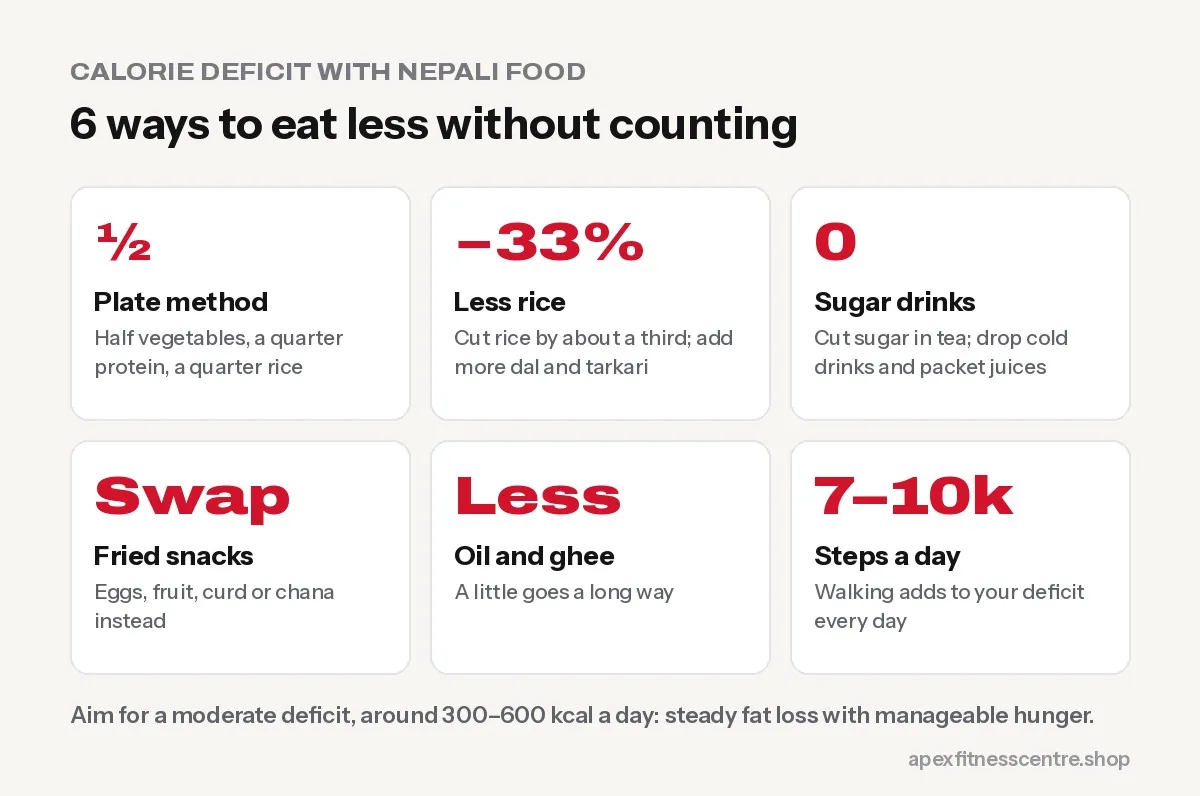
- Use the plate method: half vegetables, a quarter protein, a quarter rice.
- Reduce rice by about a third at each khana and add more dal and tarkari.
- Cut sugar in tea and drop cold drinks and packet juices.
- Swap fried snacks for eggs, fruit, curd or chana.
- Cook with less oil and ghee. A little goes a long way.
- Walk more: 7,000 to 10,000 steps a day.
- Eat protein at every meal so you feel full.
Full details in our weight loss diet plan with Nepali food.
Why crash diets backfire
- Muscle loss: your body breaks down muscle for energy, especially if protein is low.
- Constant hunger leads to binge eating.
- Lower energy means you move less without noticing.
- They’re impossible to keep up, so the weight returns.
Deficit without losing muscle
- Keep protein high: about 1.6 g per kg of body weight is a common target when dieting.
- Strength train 2 to 4 times a week.
- Lose slowly.
How to know it’s working
- Your weekly average weight trends down.
- Your waist measurement shrinks.
- Clothes feel looser.
If nothing changes for 3 weeks while you’re consistent, reduce portions slightly or add more walking. See why am I not losing weight?.
Frequently asked questions
How many calories should I eat to lose weight?
It depends on your size, age, sex and activity. Use a calculator to estimate your needs, then eat a moderate amount less. Adjust based on your weekly results.
Can I lose fat without counting calories?
Yes. The plate method, less sugar, fewer fried snacks and more walking create a deficit for most people.
Is a 1,000 calorie deficit safe?
For most people it’s too aggressive and hard to sustain without losing muscle. Aim for a moderate deficit unless supervised by a professional.
Does a calorie deficit slow metabolism?
Your body adapts a little when you eat less for a long time, mostly by moving less. Keeping protein high, lifting weights and staying active helps.
Sources
- Lose weight (NHS Better Health)
- WHO fact sheet: obesity and overweight (World Health Organization)
- A new predictive equation for resting energy expenditure in healthy individuals (Mifflin et al., 1990)
- ISSN position stand: protein and exercise (Jäger et al., 2017)
- Effects of aerobic and/or resistance training on body mass and fat mass in overweight or obese adults (Willis et al., Journal of Applied Physiology, 2012)
General information, not medical advice. People with medical conditions should plan weight loss with their doctor.
General information, not medical advice. Ask a doctor if you have a health condition. Results vary from person to person.
Comments
Loading comments…